Wildlife days run through spring and summer and cover the familiar ground of pond dipping and minibeast hunting, alongside occasional recording days that are considerably more serious than they first appear. The Brecks give all of it more substance than the same session would ever carry almost anywhere else in the country.
That is because this is a landscape protected specifically for what lives on it. Breckland heath supports plants and invertebrates found in very few other places in Britain, and a session here is working in habitat that genuinely matters, rather than in generic municipal parkland that happens to have a pond in it.
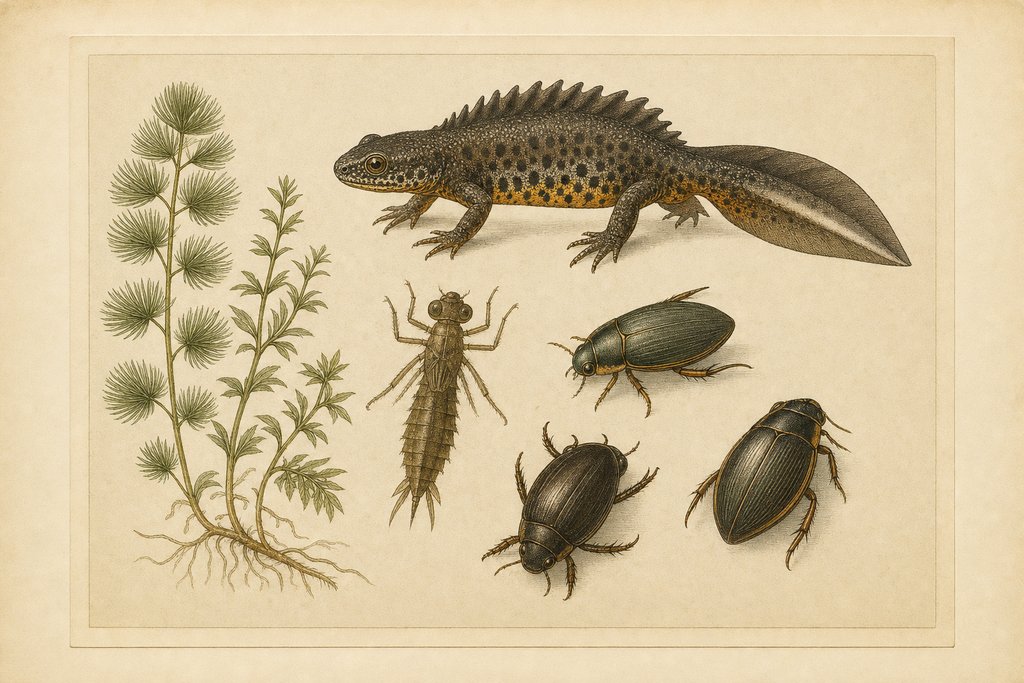
Pond dipping is where most sessions start, and the park pond delivers reliably. Dragonfly and damselfly nymphs, water beetles and the usual invertebrate community come up in a tray within minutes, and the identification sheets turn what first looks like debris into something a young child can name with real confidence.
Anything caught goes back where it came from, gently, at the end of the session. Animals should never be carried between ponds either, since spawn, plants and water can move disease and invasive species from one site to another, and amphibians in particular have suffered badly from exactly that kind of well-meant transfer across the country.
Minibeast hunting moves the same approach onto land, working the leaf litter, dead wood and grass margins. The pine litter here is unusually productive, and beating a branch over a tray produces a haul that surprises the accompanying adults considerably more than it ever surprises the children doing the beating.
Great crested newts are the exception to the rule that anything in the tray can be examined closely. The species is legally protected, and handling one deliberately requires a licence, so if one turns up the session leader decides what happens next. Watching it in the water is the right response, and it makes a better story.
Bioblitz days are the serious end of the programme and they appear occasionally and not regularly. A bioblitz sets out to record as many species as possible across a site in a fixed window, usually with specialists present, and the records that get produced go into genuine national biological recording schemes afterwards.
That distinction is worth understanding before booking one. A bioblitz is not a children's activity with a grander name; it is a recording exercise that welcomes willing participants, and the day is structured around covering ground and identifying accurately instead of around keeping a young group entertained for the duration of the day.
The heath species are the ones that make the site nationally important, and some are genuinely difficult to see. Ground-nesting birds, scarce invertebrates and specialised plants of the sandy breck are the reason for the protection, and the sessions tend to explain them carefully instead of promise anybody actual sightings.
Bring a container you do not mind getting wet, and expect to kneel on damp ground at the pond edge. Equipment is normally provided, but a hand lens of your own transforms the minibeast half of the session, and boots are more useful than shoes across every part of it.
Pond water is not something to wipe across a face or a sandwich, so soap and water or wipes afterwards are a simple precaution, and any small cut is worth covering before dipping starts. It is the same routine a school field trip follows, and it takes a minute between the pond edge and the picnic bench.
Recording matters more here than the activity alone suggests, because protected landscapes are defended with evidence. A species logged on a bioblitz becomes part of the case for how this ground is managed, which is why the specialists present take accuracy so seriously and why records are checked before submission.
Season shapes what a session can realistically find. Spring pond work turns up amphibian larvae and early nymphs, while late summer favours dragonflies on the wing and grassland invertebrates at their peak. Neither is better, but booking without that in mind is how people arrive expecting one and meet the other.
Common questions
What is a bioblitz?
A recording exercise that sets out to identify as many species as possible across a site within a fixed window, usually with specialists present. The records go into genuine biological recording schemes, so it is a survey that genuinely welcomes willing participants, and not a children's activity given a grander name.
Is pond dipping suitable for young children?
Yes, and it is normally the part that works best for them. The park pond produces dragonfly nymphs, water beetles and the usual invertebrate community within minutes, and identification sheets turn what first looks like debris into recognisable creatures that a young child can name with real confidence within minutes.
Will we see the rare Breckland species?
Probably not, and sessions are careful not to promise it. The ground-nesting birds, scarce invertebrates and specialised sandy-heath plants that make this landscape nationally important are mostly difficult to see, so the sessions explain what is here and why it matters instead of guaranteeing anybody a sighting they cannot reasonably promise.
Can children handle what they find?
Mostly they look closely in a tray or a pot of water, which is kinder to the animal and gives a better view than a cupped hand. Some species are delicate, and great crested newts are legally protected, so the session leader decides what can be picked up. Everything goes back to where it was found afterwards.
Written by Ross Bramwell, heritage and landscape editor. Habitat and species notes follow published accounts of Breckland ecology; individual session content, dates, ages and booking arrangements are all set by West Suffolk Council and by the recording groups and organisations that actually deliver each of these particular days on site.